Mount Rinjani Trekking Guide: Routes, Tips & What to Expect
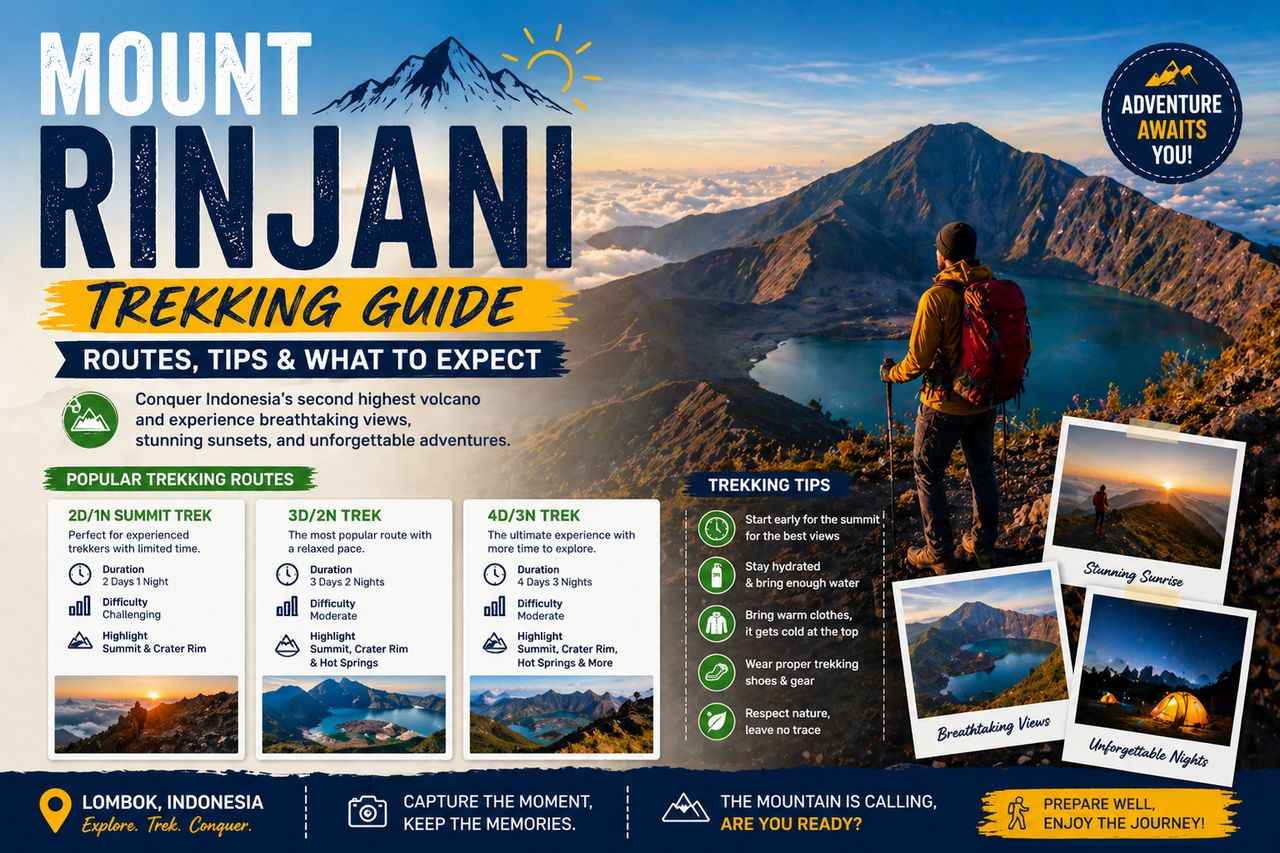
Mount Rinjani, standing at 3,726 meters above sea level, is Indonesia’s second-highest volcano and one of the most iconic trekking destinations in Southeast Asia. Located on Lombok Island, this active volcano offers breathtaking landscapes, from lush forests and rugged ridges to the stunning crater lake of Segara Anak.
This comprehensive guide is designed to help you plan your Lombok Travel Guide with confidence. Based on real trekking experiences, local operator practices, and official park guidelines.
Why Trek Mount Rinjani?
Rinjani is not just a hike—it’s a full adventure. Trekkers are rewarded with panoramic views, unforgettable sunrises above the clouds, and a sense of accomplishment that few other hikes can match. Highlights include:
- The dramatic crater rim views
- The turquoise Segara Anak lake inside the volcano
- Natural hot springs for relaxation
- Challenging summit ascent at sunrise
Trekking Routes on Mount Rinjani
1. 2 Days 1 Night (2D1N) – Summit Trek
This is the shortest and most physically demanding route, ideal for experienced hikers with limited time.
- Day 1: Trek to the crater rim (usually via Sembalun route)
- Day 2: Early morning summit push (around 2–3 AM), then descent
Best for: Fit trekkers focused on reaching the summit quickly.
2. 3 Days 2 Nights (3D2N) – Summit + Crater Lake
The most popular and recommended option, offering a more complete Rinjani experience.
- Day 1: Trek to crater rim
- Day 2: Summit hike at sunrise, descend to Segara Anak lake
- Day 3: Explore lake and hot springs, then exit trek
Best for: Travelers seeking both adventure and scenic exploration.
Popular Starting Points
- Sembalun: Easier ascent, ideal for summit attempts
- Senaru: Scenic forest trails, often used for descent
Difficulty Level
The Mount Rinjani trek is considered moderate to challenging. While no technical climbing skills are required, the hike involves:
- Long trekking hours (6–10 hours per day)
- Steep inclines and loose volcanic gravel
- Cold temperatures near the summit (as low as 0–5°C)
A good level of fitness and mental endurance is essential.
What to Expect During the Trek
1. Early Morning Summit Hike
The summit push typically begins around 2–3 AM in darkness. This challenging ascent is rewarded with a spectacular sunrise from the top of Rinjani.
2. Stunning Sunrise Views
At the summit, you’ll witness panoramic views of Lombok, Bali’s Mount Agung, and the surrounding islands—an unforgettable highlight.
3. Segara Anak Crater Lake
This beautiful volcanic lake sits within the crater and is a key highlight of the 3D2N trek. Nearby hot springs provide a natural place to relax after long trekking days.
4. Camping Experience
Trekkers camp overnight at designated spots. Most guided tours provide tents, sleeping bags, and meals.
Essential Packing List
- Sturdy hiking shoes with good grip
- Warm clothing (jacket, gloves, hat)
- Headlamp or flashlight
- Reusable water bottle or hydration pack
- Energy snacks and light meals
- Personal toiletries and basic first aid kit
- Rain jacket (weather can change quickly)
Best Time to Trek Mount Rinjani
The best time to hike is during the dry season (April to October), when trails are safer and visibility is clear. The mountain is typically closed during the rainy season (November to March) due to safety concerns.
Important Tips for a Successful Trek
- Always book with licensed trekking guides for safety and park compliance
- Train in advance with cardio and hiking अभ्यास
- Stay hydrated and pace yourself during the trek
- Pack light but bring essentials
- Respect nature and follow “leave no trace” principles
Safety Considerations
- Check weather conditions before your trek
- Be cautious of altitude sickness symptoms
- Follow your guide’s instructions at all times
- Do not attempt the trek without proper preparation
Frequently Asked Questions (FAQ)
Is the Rinjani trek worth it?
Absolutely. Mount Rinjani offers one of the most rewarding trekking experiences in Southeast Asia, combining physical challenge with extraordinary natural beauty.
Do I need a guide to hike Rinjani?
Yes, hiring a licensed guide is mandatory in most cases and highly recommended for safety and logistics.
How fit do I need to be?
You should have a moderate to high fitness level. Regular cardio and hiking preparation are strongly advised.
Can beginners hike Mount Rinjani?
Beginners can attempt the trek with proper preparation, but it is physically demanding and not recommended without prior hiking experience.
Conclusion
Mount Rinjani is more than just a trekking destination—it’s a life-changing adventure. From the challenging summit climb to the serene beauty of Segara Anak lake, every step offers something extraordinary. With proper preparation, the right mindset, and respect for nature, your Rinjani trek will be an unforgettable highlight of your journey in Indonesia.